
Python Tip of the Day: Functional Programming with map(), filter(), and reduce()
Functional Programming with map(), filter(), and reduce()
Author: Jeremy Morgan
Published: November 18, 2024
AI changed software development. This is how the pros use it.
Written for working developers, Coding with AI goes beyond hype to show how AI fits into real production workflows. Learn how to integrate AI into Python projects, avoid hallucinations, refactor safely, generate tests and docs, and reclaim hours of development time—using techniques tested in real-world projects.
Process data in a functional style—clean and expressive.
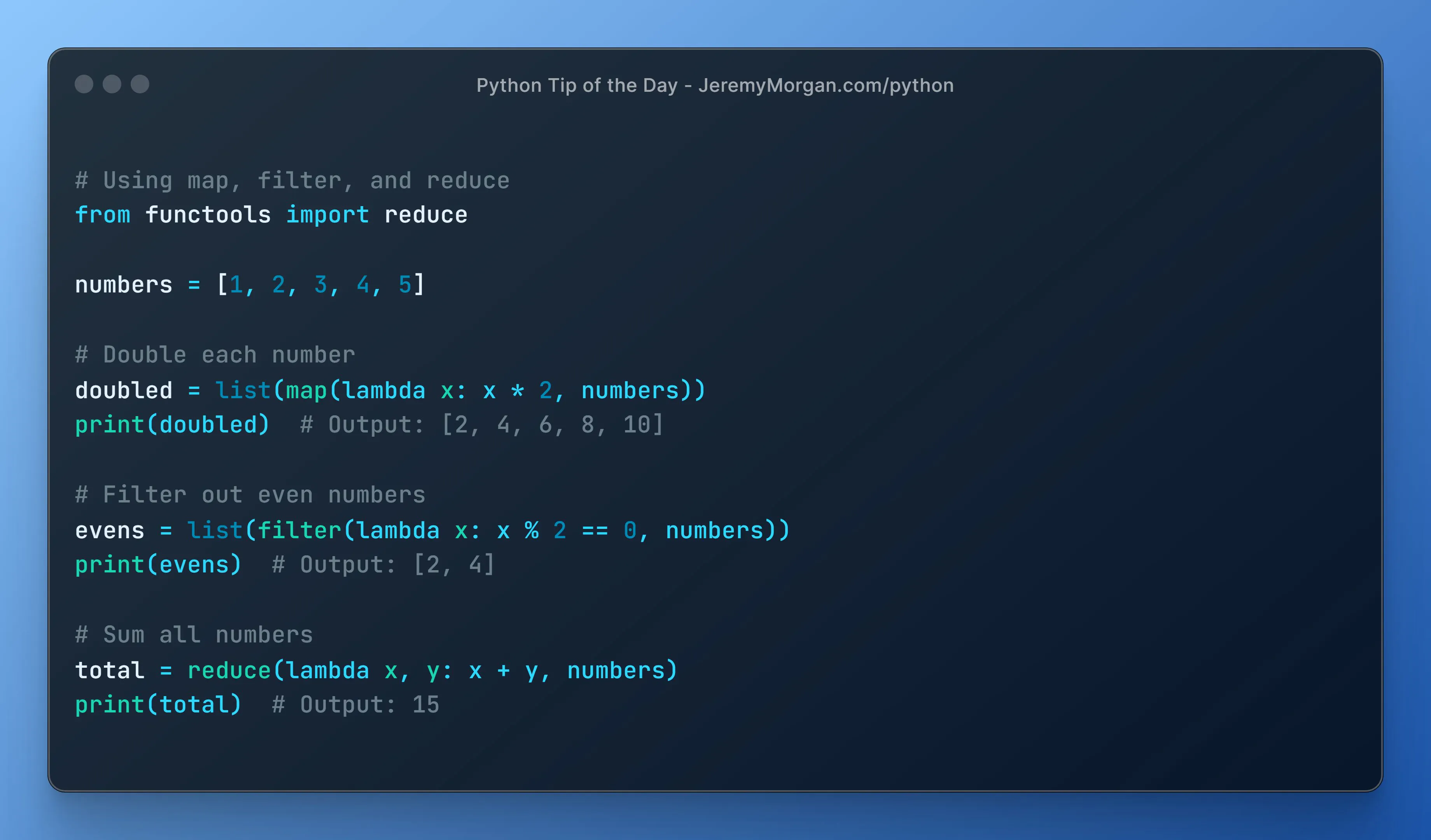
# Using map, filter, and reduce
from functools import reduce

numbers = [1, 2, 3, 4, 5]

# Double each number
doubled = list(map(lambda x: x * 2, numbers))
print(doubled)  # Output: [2, 4, 6, 8, 10]

# Filter out even numbers
evens = list(filter(lambda x: x % 2 == 0, numbers))
print(evens)  # Output: [2, 4]

# Sum all numbers
total = reduce(lambda x, y: x + y, numbers)
print(total)  # Output: 15
The Python Tip of the Day is a daily series published in the month of November. The tips are designed to help you become a better Python programmer. I post tips like this and more every single day on X. Let’s connect!
AI changed software development. This is how the pros use it.
Written for working developers, Coding with AI goes beyond hype to show how AI fits into real production workflows. Learn how to integrate AI into Python projects, avoid hallucinations, refactor safely, generate tests and docs, and reclaim hours of development time—using techniques tested in real-world projects.